This is Your Hospital- mental health treatment in Croydon
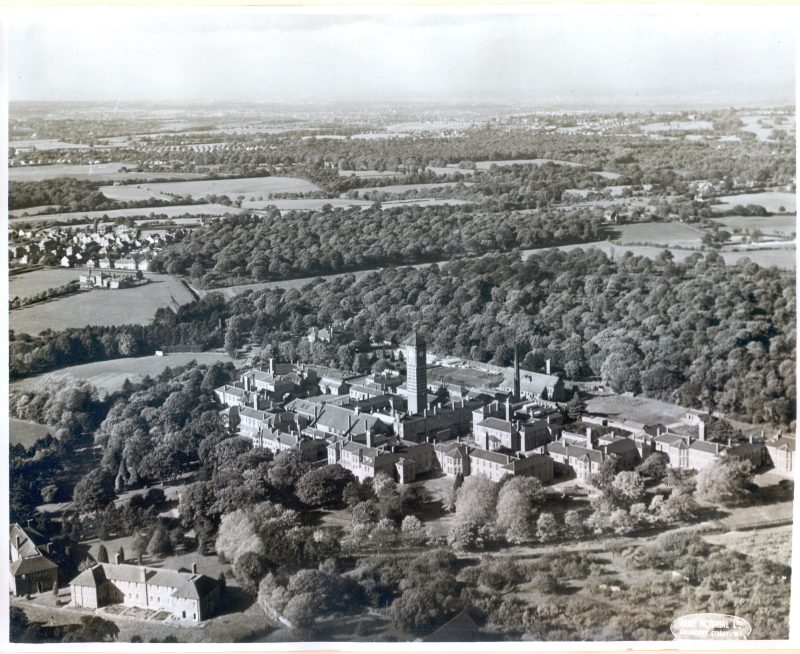
Warlingham Park Hospital from the air c.1945
At Bethlem Museum of the Mind we are often asked about the long history of Bethlem, or the innovative treatments at the Maudsley. However this overlooks our third major hospital collection, that of Warlingham Park, the Borough asylum for Croydon. This blog is a signpost to resources you can use to find out about Warlingham Park, and the wider history of mental health services in Croydon.
For a wider interest in the history of the hospital, the publication 'Warlingham Park Hospital- A Pictorial History 1903-1999' by Patrick Crehan, Claire Henderson and Emma Rayment, which we hold in the Museum, is a really excellent place to begin.
Before Warlingham Park
The era of mental health treatment from roughly 1725 to 1815 is often known as the time of the 'madhouses'. During this period, when specialist mental healthcare was needed, families and local authorities would often send people to privately run institutions. There was no regulation of this sector, and the care provided varied enormously- and was often, though not always, dependent on how much money was being paid.
However, during this period there does not seem to have been a well-established facility in Croydon for any length of time. In his landmark study of 'madhouses', William Llewellyn Parry-Jones didn't find reference to anything within the borders of the parish of Croydon, or the neighbouring villages which became the local borough in the mid-1800s. The closest were 'The Recovery' and 'the house of Dr William Finch, MD', both in Mitcham. This isn't surprising- Croydon in the early 1800s was still a very rural location, so it makes sense that private investors would perhaps choose other locations. A picture of 'The Recovery' in Surrey History Centre shows a large house, with very little sign of its purpose. This was not untypical of these sorts of places, which were very often converted residences that held relatively small numbers of patients.
Change in Croydon
For much of the 1800s Croydon was simply part of of Surrey, and as the responsibility for mental healthcare shifted from the private providers of 'madhouses' to the public authorities to provide via 'asylums', large residential mental hospitals, Croydon residents who required help would potentially have been served by the very large hospitals constructed by the County authorities. In 1861 the list of long term residents at Croydon's workhouse show a number of people suffering mental health issues (on Peter Higginbotham's excellent workhouses website), which suggest the authorities did try to keep people unable to help themselves (so-called 'pauper lunatics') close if they could. Cane Hill Hospital, initially known as the third Surrey County Asylum when it opened in 1888, was actually built in Coulsdon, within Croydon's borders, and it is quite possible that a large number of the 1100 patients came from Croydon itself.
Croydon itself was changing fast at this time. The coming of the railways in the 1850s turned a sleepy village into a bustling urban landscape. In the 1851 census there were 20,343 people in the Croydon area, which by 1931 had expanded to 233,032. The civic infrastructure had also changed - Croydon gained a Poor Law Board of Guardians in 1836, a Local Board of Health in 1849 and had become part of the Metropolitan Police District in 1840. The key change was the new urban area being incorporated as a Borough in 1883, and as a 'county borough' in 1889.
Cane Hill had by 1889 been taken over by the London County Council (LCC). In 1893 the LCC renewed their agreement to provide mental health accommodation for Croydon, but also gave the Croydon Visiting Committee (the people responsible for mental healthcare in the Borough) notice that this would not be renewed. The Borough Council decided that the answer was to construct their own accommodation.
Croydon Mental Hospital
The Visiting Committee decided that accommodation for 400 patients was needed, and with the assistance of Cane Hill's Superintendent found a suitable site for a new hospital in the parish of Chelsham, just to the north east of the village of Warlingham. Designed by Messrs Crisp, Oatley and Skinner of Bristol, the new 'Croydon Mental Hospital' was constructed by Messers H Willcock & Co of Wolverhampton at a cost of £236,159, and was opened on 26 June 1903. The name was deliberately chosen- while the appearance was that of a 'classic' asylum with a water tower, it was to be a modern hospital, and it had facilities like an x-ray machine and operating theatre installed from it's opening. There was also a small isolation hospital, and accommodation for staff.
Many of the long-term patients admitted to the Hospital came not from Cane Hill, but instead from Fisherton House in Salisbury and the Isle of Wight Asylum following the end of the agreement with the LCC. Initially accommodation was created for 437 patients (194 men and 243 women), but the Hospital steadily expanded across the 1920s and 1930s until it could house over 800.
TP Rees and 'This is Your Hospital'
In 1935 Dr Thomas Percy Rees was appointed as Superintendent of the Hospital, and he decided to take the Hospital in a decidedly modern direction. In late 1935 he opened the gates and front doors of the Hospital, allowing patients freedom to roam the grounds as suitable, and he began to encourage increased visiting hours. In 1937 he changed the name to 'Warlingham Park Hospital' in order to try and remove some of the perceived stigma around the treatments.
In the 1950s the changes went further. Rees turned the isolation hospital, 'Pinel House', into a specialist centre treating alcoholism and addiction under Dr Max Glatt, who pioneered the use of Alcoholics Anonymous in his therapy. In 1957 a new social centre, with amenities like a hairdresser, library, and cafe opened. Rees wanted his patients to learn useful skills and to rehabilitate while in treatment in his Hospital, and you can get a sense of this in 'This is Your Hospital', a film introducing new patients to the Hospital in 1964. Our learning resource of the same name also explores what life was like in the Hospital during the 1960s.
Some of the innovations carried darker implications. Rees fully encouraged the use of ECT with long term patients in an attempt to cure them, often administering many doses of the treatment in a shorter space of time than would be permitted today (though this was wholly in-line with the psychiatric expectations of the 1950s). Warlingham Park also offered leucotomy/lobotomy, which Rees seems to have regarded as a working therapy for patients that it could not otherwise treat.
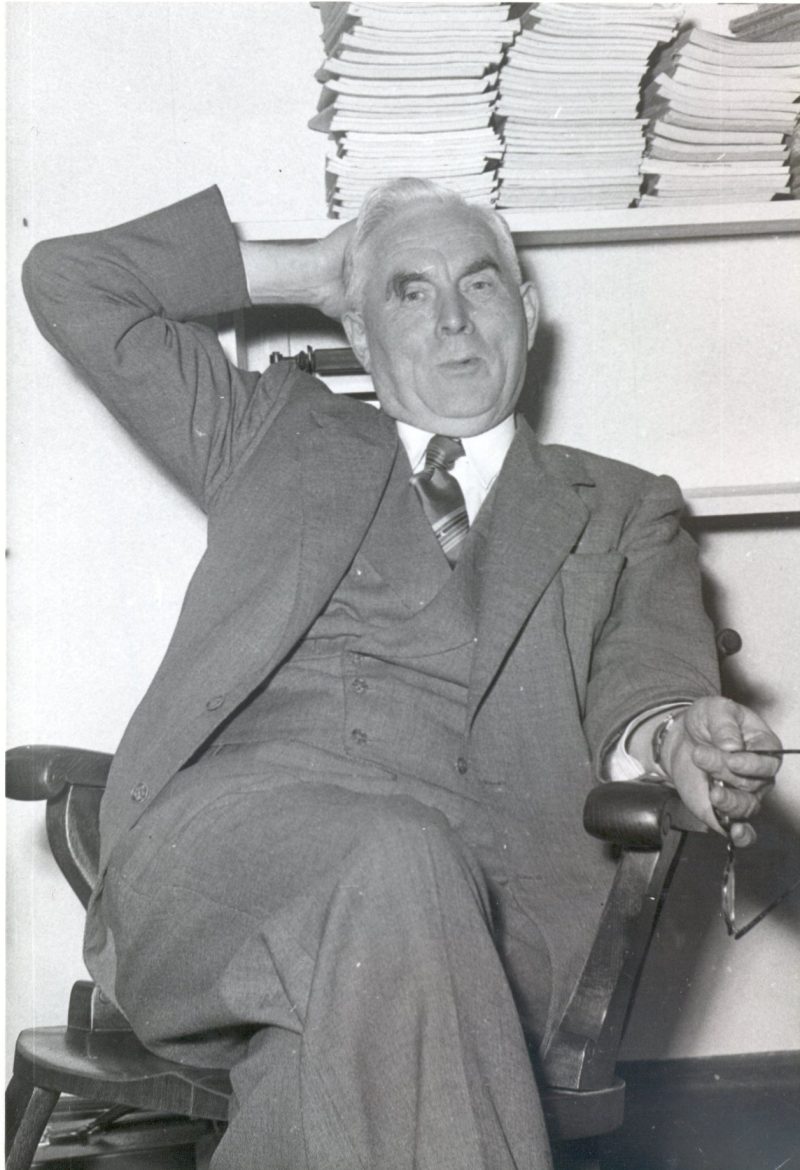
Dr TP Rees c.1950s
Outpatient services and the end of Warlingham Park
In 1960, Enoch Powell's 'Water Tower' speech heralded the end of residential mental healthcare, and a switch to more community based treatments. The new wave of anti-psychotic medicine meant that mental health issues could be treated in the community, rather than in expensive residential hospitals.
Warlingham Park adapted to this new environment by providing new day centres and hospitals across Croydon, including the Oaks Day Centre (opened in 1961), and the Child Guidance Clinic at Park Lane (1953). In 1954 TP Rees appointed sister Lena Peat and Charge Nurse Reginald Bowen as the UK's first community psychiatric nurses, employed to check in on discharged patients. In 1969 Purley Day Hospital was opened to provide day and outpatient services for Purley and Coulsdon.
Meanwhile services at the main hospital were beginning to be wound down, with patient numbers falling from 847 to 475 between 1971 and 1983. There were two serious fires in the Hospital buildings, one which destroyed the chapel in 1967, and another which resulted in the deaths of seven elderly patients in 1981. Together with a spate of suicides of inpatients and former patients in the 1970s, public opinion increasingly turned against the residential care offered by Warlingham Park.
Following a reorganisation of the NHS in 1995, the Bethlem and Maudsley NHS Trust was placed in charge of mental healthcare in Croydon. The new Trust (a predecessor of the current South London and Maudsley NHS Foundation Trust) closed Warlingham Park Hospital in 1999. Many of the acute services for Croydon moved onto the wards of Bethlem Royal Hospital, including the move of the elderly patient unit into the new Chelsham House on the Monks Orchard site, named after the location of Warlingham Park.
The site of the Hospital was completely redeveloped into Warlingham Great Park. Today there are only a few signs of the original hospital, including the water tower, cemetery and cricket pitch. You can find a listing of the records of Warlingham Park on our page here, and patient records up to 1914 are digitised on the Find My Past website, more information on our case record guide here.